ISS FALLOUT · PLANNED DEORBIT JANUARY 2031
THE ISS HAS
1,539 DAYS
LEFT.
Then it's steered into the Pacific. Every pass from here on is one of the last. Here's your next one.
WHEN CAN YOU SEE IT?
Find out when the ISS next crosses your sky.
Counting down to NASA's planned deorbit in January 2031, the same date the panel uses. It can move. Source.
HOW IT ENDS
THREE DECADES UP.
ONE WAY DOWN.
- 01
THE LAST CREWS
The station's partners have committed to running it through 2030. Until then it keeps circling the Earth every 90 minutes, about 400 km up.
- 02
THE LONG FALL
In its final stretch the station is let sink lower. Then a SpaceX-built deorbit vehicle makes the last burn.
- 03
SPLASHDOWN
What survives re-entry falls into a remote part of the South Pacific, far from shipping lanes and people.
HOW TO SPOT IT
LOOK UP
AT THE RIGHT MINUTE.
- LOOK FORA bright, steady light moving faster than a plane. No blinking, no colours.
- WHENJust after dusk or before dawn: you're in the dark, the station is still in sunlight.
- HOW LONGA good pass takes four to six minutes from one side of the sky to the other.
- WHAT YOU NEEDNothing. No telescope, no binoculars. A clear sky helps.
HIGH ABOVE
IT WATCHES
SO YOU DON'T.
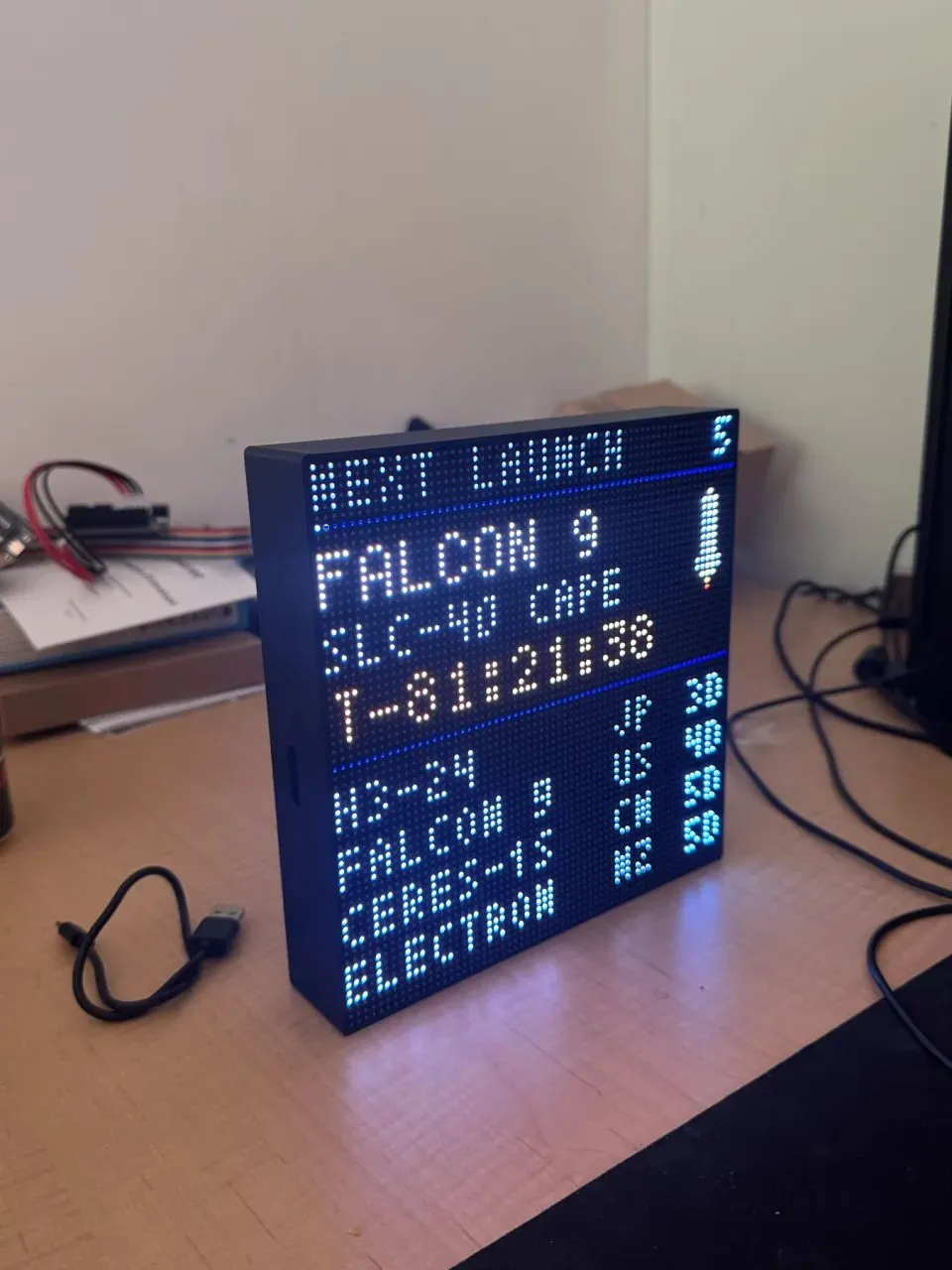
High Above is a 64×64 LED panel for your desk or wall. It counts down every pass of the ISS over your place, every launch on Earth, and cuts in when it's time to look up. This countdown is one of its pages.
Sign up for the launch price deal.